Africa
| Total Organizations: | 2 | |
|---|---|---|
| Total Projects: | 0 | |
| Priority SDGs: |
Sustainable Agriculture (SDG 2.4)
Increase Access to Water, Sanitation, Hygiene (SDG 6.1 & 6.2) Water Quality (SDG 6.3) Water Use Efficiency (SDG 6.4) Integrated Water Resource Management (SDG 6.5) Protect and Restore Ecosystems (SDG 6.6) International Cooperation and Capacity Building (SDG 6.a) Stakeholder Participation (SDG 6.b) Water-Related Disaster Management (SDG 11.5) Sustainable Production (SDG 12.4) Climate Resilience and Adaptation (SDG 13.1) |
|
| Priority Regions: | -- | |
| Priority Industries: |
Biotech, health care & pharma
Food, beverage & agriculture Fossil fuels Manufacturing Power generation Retail Services |
|
| Organization Types: |
50%
International Organization
50%
NGO / Civil Society
|
|
| Profile Completion: | 64% | |
Total annual estimated cost to address all water-related challenges: $55,756,282.00
Share of total annual estimated cost to address each individual challenge (2015 $USD):
For more about this data, see information on WRI’s Achieving Abundance dataset here.
As reported by organizations on the Hub.
No challenges found.
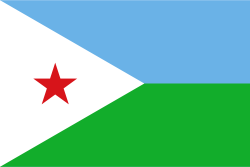
1.1.2.WATER USE It is estimated that water demands for 2000 were 19 million m3, of which 2.5 million m3 was for irrigation (13 per cent), 0.5 million m3 for livestock (3 per cent) and 16 million m3 for communities (84 per cent). Another figure of 7.41 million m3 for agriculture is also sometimes given, but this figure is probably overstated because, typically, only a third of the fenced area is currently irrigated. About 95 per cent of water needs are provided by groundwater resources. Population pressure is increasing, resulting in overuse and salinization. By 2015, demand may amount to more than 29 million m3. In 2000, there were 600 water points (partially functional) and 56 pumping stations in rural areas throughout the country. Salinity due to over-exploitation is increasing and more than half of the drilling in Djibouti recorded levels of more than 900mg/L, and sometimes of up to 1,200mg/L. In general, the use of groundwater for irrigation is limited by problems of excessive salinity, even in the alluvial groundwater. Only waters in the northwest of the country have ionic concentrations below the standards necessary for irrigation. High levels of boron are common. Few locations are favourable for irrigation projects from drilling. However, it is possible to use water from the subflows in the wadis where watersheds are large and floods are regular. The under-development and poor economic performance of the agriculture sector is a direct consequence of the country’s inherent aridity and its fragile water and soil resource base, which constrain local production. It also results, in part, from low levels of investment in modern farming practices, especially in the area of water resource management (rainwater harvesting, construction of boreholes, recharge of aquifer, etc.), which is necessary in order to increase sectoral outputs and productivity in a sustainable and effective manner. Given the predominance of the urban population, the government of Djibouti has favoured until now the development of the service sector, with the objective of positioning Djibouti as a strategic transit hub that can offer commercial access to the sea for neighbouring landlocked countries. As a result, few investments have been made in agriculture and rural development and productivity levels have been stagnant or even in decline, especially during recent dry years. However, because of high poverty rates and limited cash income opportunities in rural areas, agricultural activities do continue to play a critical role in the food supply and daily subsistence of the rural communities involved in production (AFB, 2011). Nomadic pastoral and farming systems, including agro-pastoralism, have reached their production limit, largely due to increasing water stress and land degradation. Being mostly a volcanic arid landscape, Djibouti is highly susceptible to desertification and pastoral communities relying on natural rangelands have been increasingly affected by a mounting trend of aridity and desertification. The more frequent and longer droughts of the past decades have inflicted major blows on the quality, productivity and spatial distribution of natural pastures and water points, which are mainly shaped by rainfall and are critical for livestock survival during the dry season (AFB, 2011). At the same time, government policies constraining herd mobility and encouraging sedentarization have been introduced on the assumption that it is impossible, or anyway too expensive, to deliver satisfactory development services (e.g. health and education) to mobile pastoralists. In response to these drivers, many nomadic communities have settled in the last few decades, if not migrated to urban areas, concentrating mainly around relatively reliable water sources and imposing enormous pressures on the neighbouring land and limited water resources (AFB, 2011).
1.2.WATER QUALITY, ECOSYSTEMS AND HUMAN HEALTH Overexploitation of renewable groundwater is estimated at 15 million m3 per year. The salinity of the water can reach 1.9g/L, making it unfit for consumption. The lack of adequate sanitation is a concern in Djibouti City. There are signs of salinization of land, which may lead to sterility. According to the 2004 Djibouti Poverty Reduction Strategy Paper (PRSP), foreign nationals represent 15 per cent of the total population. The population continues to be plagued by a high and rising incidence of tuberculosis, malaria, cholera and AIDS (WHO, 2004). Tuberculosis (TB), the ailment most typically associated with poverty, overcrowding and poor hygiene, has a long history in Djibouti. With 588 cases of TB per 100,000 inhabitants, Djibouti has the second-highest rate of TB incidence in the world, after Swaziland. However, about 40 per cent of the cases come from neighbouring countries, in particular from Ethiopia, which inflates the rate. Foreigners come to Djibouti because it offers more and better-quality services. Over the last ten years, Djibouti has recorded an average of about 3,572 new cases of tuberculosis per year, peaking in 2000 with 4,121 diagnosed cases. As with other countries, the link between HIV and TB is apparent. Although the sero-prevalence rate in the general population is less than 3 per cent, it was 26.1 per cent among TB patients in 2001, up from 13.1 per cent in 1999. Even though the national programme remains one of the best in the region, with a 72 per cent therapeutic success rate (treatment completed and patients cured) in 2000, a serious lack of personnel and the loss of financial assistance from France Cooperation in June 2002 made it difficult to maintain previous performance levels. Malaria has only been a problem in Djibouti since the late 1980s. Before 1973, when there was no urbanization, no irrigation and an active attempt to control the vector during the rainy season, more than 80 per cent of the notified cases were from people entering Djibouti from neighbouring countries. From 1973 to 1987, more Djibouti nationals’ cases appeared along the main transport Country Overview - Djibouti lines linking Djibouti to neighbouring countries and, after 1987, cases manifested in the urban areas as thousands of refugees resettled in Djibouti. Since 1988, the spread of malaria has increased steadily. Uncontrolled urbanization with insufficient water supplies, non-existent wastewater evacuation systems, the settlement of nomad population in rural areas, increased irrigated areas and frequent floods have contributed to the endemic. Djibouti currently records over 4,000 confirmed cases of malaria each year (WHO, 2004). In 1997, according to a report by the Ministry of Health (MOH), diarrhoeal illnesses (e.g. cholera, typhoid fever, amoebic dysentery, viral hepatitis, etc.) accounted overall for 11 per cent of medical consultations; for children under the age of five, the figure was 16.5 per cent. In addition, the MOH’s 1996 report indicates that diarrhoeal illnesses are the second most frequent cause of inhospital mortality, accounting for 12 per cent of such deaths. The same report identifies diarrhoeal illnesses as the second most frequent cause of death for children between the ages of one and four years. Poor water quality affecting mainly the rural and poorer segments of the population is a contributing factor in these cases (WHO, 2004). Since 1989, Djibouti has experienced four cholera epidemics, the last three of which affected nearly the entire country, although the majority of cases were in the city of Djibouti. Care of those stricken with cholera has gradually improved: while the epidemic of 1989 killed 8 per cent of its victims, the mortality rate was 2 per cent for the epidemics of 1993 and 1997, and even higher for the most recent epidemic in 2000. During the 1997 cholera epidemic, increased epidemiological surveillance of diarrhoeal illnesses revealed that dysentery accounted for about 10 per cent of the cases of diarrhoea recorded during the outbreak (WHO, 2004)
(Water Risk Filter)
Coming Soon

African Agency for Integrated Development (AAID) (Organization)
To Strengthen the marginalised and needy among the community to come up with sustainable, low cost and gender responsive solutions to their problems Learn More

WASH Africa (Organization)
Mission To promote Water, Sanitation, Hygiene, Health and Safety in Cameroon and beyond Vision Strong, Healthy and productive communities. Our Core Transparency, Accountability, Integrity and Honesty. Learn More
None found.
 Loading Suggested Resources
Loading Lessons
Loading Suggested Resources
Loading Lessons


